 Europe
Choosing between the four Dermawhite shades
BB Glow is a tone treatment, which means the shade decision is made at consultation, not at the trolley — and undertone matters more than depth.
What the ampoule actually is
STAYVE Dermawhite BB Glow is a serum with foundation pigment suspended in it, formulated for the Microneedling Therapy System. According to the manufacturer's catalogue it nourishes the skin to look bright and radiant and provides immediate coverage without excessive irritation, combining the tint with niacinamide and peptide. The manufacturer also states that it does not clog pores the way a BB cream or foundation can, because the product is worked into the upper layers rather than laid on top of them.
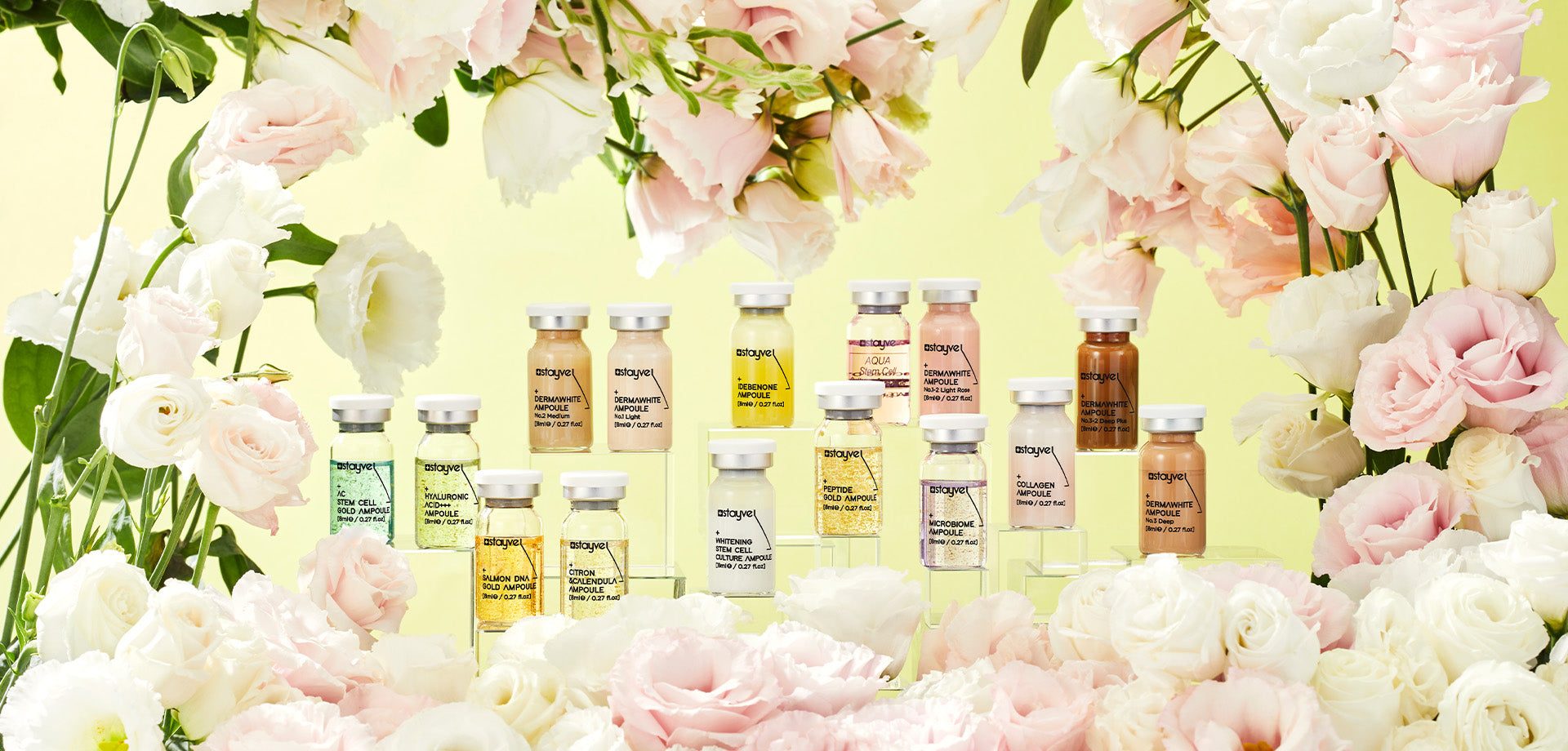
Four shades are sold in the BB Glow range. They are not four steps on a single ladder — three of them are about depth, and one of them is about undertone.
The four shades, in the manufacturer's own terms
| Shade | Manufacturer's description | Reads as |
|---|---|---|
| No.1 Light | Ideal for people with extra-light skin tones | The lightest option in the range; the usual starting point for very fair clients |
| No.1-2 Light Rose | Ideal for people with pink undertones | A beige with several pink undertones — a sibling of No.1, not a step darker |
| No.2 Medium | Ideal for people with medium skin tones | A medium beige with yellow undertones |
| No.3 Deep | Ideal for people with tanned or bronze skin tones | The deepest option, also used on medium-to-dark complexions |
The pair to understand is No.1 Light and No.1-2 Light Rose. Both sit at the light end. The choice between them is whether your client's skin runs cool and pink or simply pale. On a client with visible pink in the cheeks and a tendency to flush, the rose version disappears; the plain light version can look chalky against it. That is the single most common shade mistake with this range.
At the other end, No.2 Medium carries yellow undertones and No.3 Deep is the manufacturer's answer for tanned and bronze skin. Both matter in a European salon with a seasonal clientele: a client who is No.1-2 in February can be closer to No.2 in August, and the shade you noted in her file is a record, not a rule.
Mixing, and why the starter kit exists
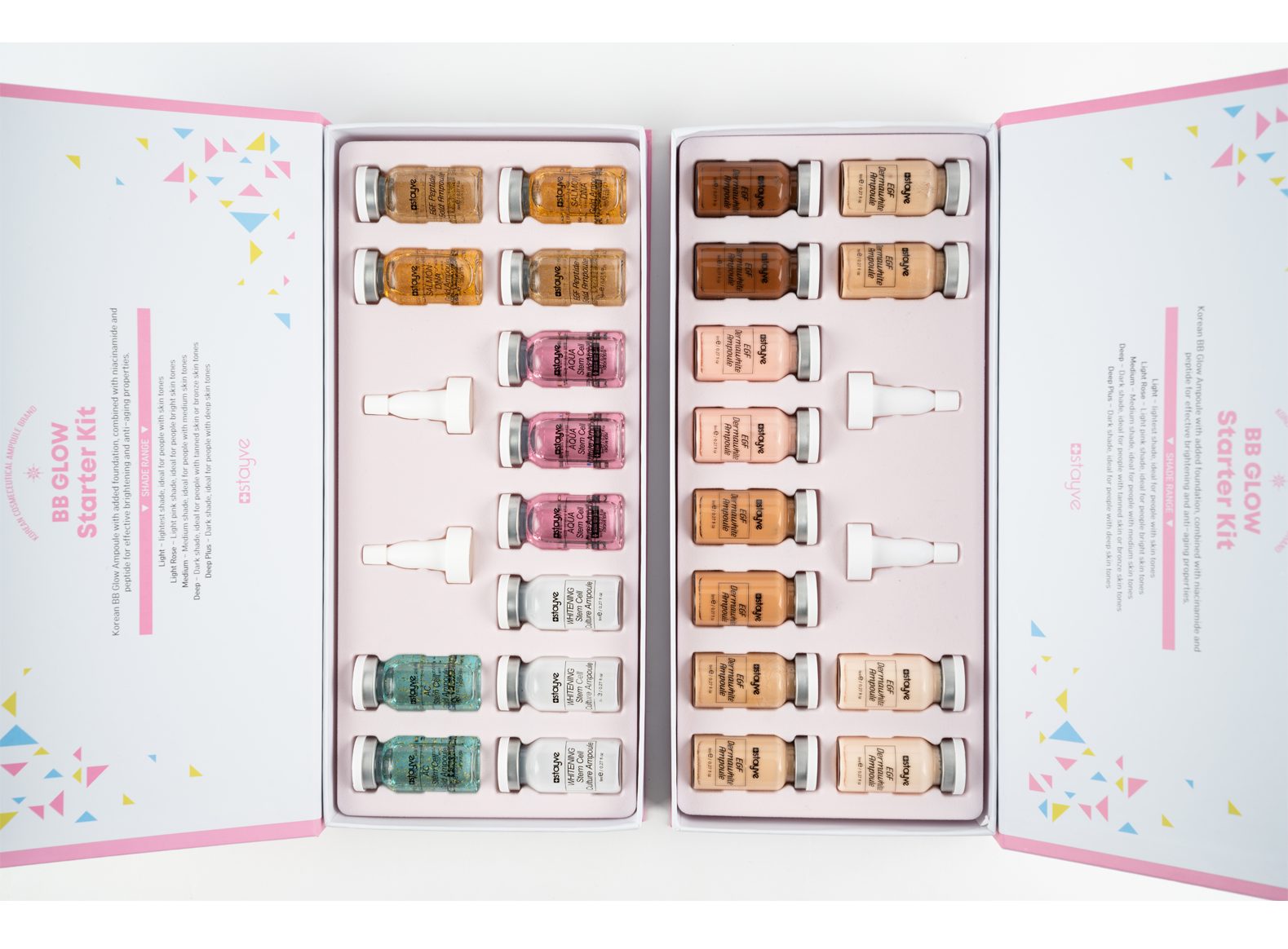
Because the shades are serums rather than pressed pigment, practitioners commonly work between two neighbours rather than accepting a compromise at either end. That is the practical case for the BB Glow Starter Kit, which brings the Dermawhite shades together in a single box of 8 ml vials — the manufacturer positions its kits as being for beginners and academy students precisely because you can pick and choose across a variety of ampoules. The kits section also carries a customised box for practitioners who already know which two or three shades they actually use.
Storage discipline applies once a vial is open. The Dermawhite documentation states that after opening, the product should be used within two weeks and kept refrigerated, with the expiry date printed on the box. A half-used vial left on a warm trolley for a month is not the product you paid for.
How the treatment is applied
The application sequence is identical across all four shades, and it is short:
- Prepare the skin. The manufacturer's own programme runs cleansing milk, then toner, then the Dermawhite Exfoliating Gel and its neutralising foam. The BB Glow documentation states flatly that the skin must be properly prepared before treatment.
- Apply the ampoule and work with the MTS machine, starting at the chin and moving towards the forehead — against the direction of the muscle.
- If the ampoule dries during the pass, apply more rather than dragging over a dry surface.
- Choose the needle by programme: for Booster and BB Glow combined the catalogue specifies nano or middle-length needles, and the Dermawhite documentation gives a working range of 0.25 mm to 1 mm.
- Application time: ten minutes.
The needle guidance is the part people skip. BB Glow is shallow work — the pigment is meant to sit where it can be seen, and reaching for a long cartridge because the skin feels thick is a change of treatment, not a change of technique. If you want the deeper booster protocol as well, the catalogue treats it as a separate programme with its own needle length.
What to tell the client
Set the expectation before the first pass, and keep it inside what the manufacturer actually claims. The catalogue describes immediate coverage and a gradual brightening effect, hydration that leaves the skin feeling soft, and a reduction in the look of freckles and discolouration caused by photo-ageing and acne. It describes appearance. It does not promise a permanent result, a fixed number of shades of change, or a medical outcome, and neither should you.
Three things are worth saying out loud at consultation:
- It adapts. The manufacturer states that after application the ampoules blend in and adapt to the client's skin tone. The first hour is not the final look.
- It is not a foundation replacement with a fixed lifespan. The catalogue publishes no duration figure, and no recommended number or spacing of sessions for a course. Ask your supplier before you print a course price.
- It is professional-use. The exclusions the manufacturer lists for MTS apply here too: keloid constitution, diabetes complications, skin infections and bleeding diseases.
Aftercare
Finish with a repair step. The manufacturer's post-treatment product is the STAYVE Repair Cream, applied to face and neck and massaged in for about a minute; the wider Facial Treat line covers the cleansing and toning either side of the treatment. Sun exposure is the obvious enemy of a brightening protocol, so sunscreen belongs in the aftercare card whatever shade you used.
Get the undertone right and the rest of the appointment is straightforward. Get it wrong and no amount of technique rescues it.