 Europe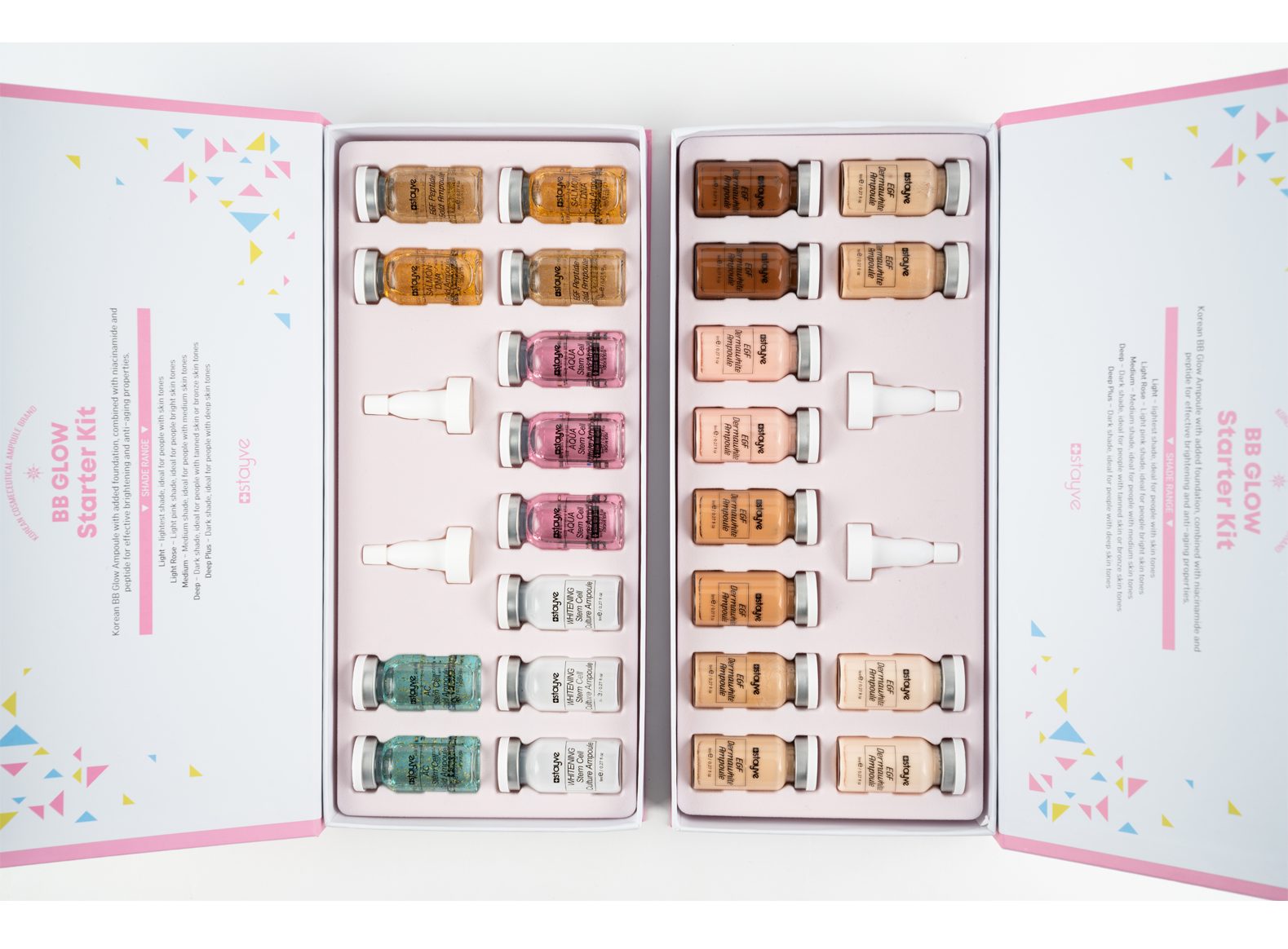
What microneedling therapy actually does
The Microneedling Therapy System is not a delivery gimmick and not a resurfacing laser — it is a mechanical answer to a very specific problem, and the manufacturer's own catalogue is unusually clear about its limits.
The problem it is built to solve
Almost everything you put on a client's face stays on the surface. According to the EVIE KOREA 2026 catalogue, only about 0.03 to 2 per cent of a cosmetic product is absorbed, and that figure applies even to formulas with the smallest particle sizes. Whatever the serum costs, the stratum corneum decides how much of it matters.
MTS changes the arithmetic. Fine needles open temporary channels so the product reaches the dermis, and the catalogue is explicit that this happens without damaging the epidermal layer. For the STAYVE Booster range the manufacturer states that the needles penetrating the skin during treatment allow the ampoule to be absorbed three times more effectively than by simple application.
That is the whole professional argument for the method: the same ampoule, delivered differently, is a different treatment. It is also why the ampoule you choose matters more in MTS than in a manual facial — you are no longer working with whatever survives the barrier.
Fibroblasts, and what the catalogue does and does not claim
The manufacturer defines MTS as a treatment system that helps regenerate the skin by using needles to stimulate fibroblasts, and states that this stimulation increases collagen production while leaving the epidermal layer intact. Fibroblasts are the cells in the dermis responsible for producing collagen and elastin; controlled micro-injury is the signal that puts them to work.
Note what is absent. The catalogue publishes no percentages for collagen increase, no session counts and no timelines for visible change, and no study references behind the fibroblast and collagen claims. If a client asks you how much collagen the treatment produces, the honest answer is that the manufacturer does not publish a number — and you should not invent one for them.
Needle length is a programme decision, not a preference
The catalogue ties needle choice to the programme rather than to the operator's habit. Its instructions, repeated on every ampoule page, are short:
- Booster combined with BB Glow — use nano or middle-length needles. Pigment sits in the upper layers; going deeper is not the goal.
- Booster alone — longer needles may be used, 1.0 mm or longer.
- BB Glow ampoules — the product documentation for the Dermawhite range gives a working range of 0.25 mm to 1 mm.
- Cherips lip work — plastic needles only, with the machine running for roughly two to three minutes per pass.
The hardware sets the ceiling. The MISSMITO MTSP plastic cartridge has 37 pins and a maximum depth of 0.8 mm, which covers nano and shallow work including lips. The MTS36 metal cartridge has 36 iron pins and reaches a maximum of 2.5 mm, which is what you need for the longer booster-only protocols. Both are sold in packs of fifteen, and both are single-use. You can see the full machine and cartridge range under devices.
One hardware rule from the catalogue is absolute and worth repeating to every new hire: MISSMITO needles are not suitable for other brands of machines. A cartridge that seats badly is a depth problem, not an inconvenience.
Contraindications listed by the manufacturer
The catalogue states plainly that MTS should not be performed on clients with any of the following:
- a keloid constitution;
- diabetes complications;
- skin infections;
- bleeding diseases.
These are the manufacturer's own exclusions, not a general clinical list, and they are short enough to belong on your consultation form word for word. Anything beyond them — medication, pregnancy, active isotretinoin, recent resurfacing — is a matter for your own protocol and your national rules. Who may perform microneedling, and at what depths, is decided country by country — check the rules where you practise before you set your protocol.
For sensitive or problematic skin the manufacturer recommends a patch test on a small area before using a product, advice it gives in the peeling section but which travels well to any first treatment with a new formula.
How the treatment runs
The application instructions are the same across the BB Glow and Booster ranges. Apply the ampoule, then work with the machine starting at the chin and moving towards the forehead — against the direction of the muscle. If the ampoule dries during the pass, apply more rather than continuing on a dry surface. Application time is given as ten minutes.
That ten-minute figure is the machine time, not the appointment. Around it sits the preparation the manufacturer builds into its own programmes: cleansing, toning, then acid exfoliation and neutralisation before the needles ever touch the skin. The Facial Treat line exists for exactly that sequence, and the Dermawhite Exfoliating Gel has its own timing by skin type — two minutes for sensitive, three for normal, five for oily — followed by the neutralising foam to stop the acid and restore pH.
After the needles
Skin that has just been channelled is stimulated skin. The catalogue's own post-treatment step is a repair product: the STAYVE Repair Cream, described as replenishing moisture balance and forming a breathable moisture layer, applied to face and neck for about a minute. Sun protection belongs in the aftercare conversation too — the manufacturer insists on sunscreen after peeling, and the same logic applies to freshly needled skin.
The catalogue does not publish a recommended interval between STAYVE ampoule sessions. Ask your supplier before you commit to a course structure in your price list.
Where to start
If you are building an MTS offer from nothing, the order that matters is machine, then cartridges, then formulas. The Booster ampoules are chosen by skin type across nine options; the BB Glow shades are chosen by tone. Both are professional-use products, and both assume you already know which needle you are reaching for and why.